STARTER, GROWER AND FINISHER PIG FEED: UNDERSTANDING THE DIFFERENT FEEDING STAGES
Feeding pigs properly is one of the most important responsibilities of a successful pig farmer. However, good pig feeding is not simply about giving pigs as much feed as possible. It is about understanding what pigs need at different stages of growth and providing nutrition that supports efficient development. A young pig has different nutritional requirements from a growing pig. Likewise, a pig approaching market weight does not necessarily require exactly the same feeding programme as a younger animal.
Feeding pigs properly is one of the most important responsibilities of a successful pig farmer.
However, good pig feeding is not simply about giving pigs as much feed as possible. It is about understanding what pigs need at different stages of growth and providing nutrition that supports efficient development.
A young pig has different nutritional requirements from a growing pig. Likewise, a pig approaching market weight does not necessarily require exactly the same feeding programme as a younger animal.
This is why pig feeding programmes are commonly divided into different stages.
The major stages include starter, grower and finisher feeding.
Understanding these feeding stages can help farmers make better nutrition decisions, monitor pig performance more effectively, reduce unnecessary feed wastage and improve the overall efficiency of their production system.
In this article, we explain the differences between starter, grower and finisher pig feed, the importance of each feeding stage and the management practices that can support better pig performance.
WHY PIG FEEDING STAGES ARE IMPORTANT
Pig production is a process of continuous growth and development.
As pigs grow, their body size changes. Their digestive capacity develops, their rate of growth changes and their nutritional requirements also change.
For this reason, a single feeding programme may not always be the most efficient approach throughout the entire production period.
A properly planned feeding programme can help farmers support healthy growth, efficient body development, better feed utilization, reduced feed wastage, more uniform pig performance, improved production planning and better control of feeding costs.
The goal is not simply to feed pigs until they are full.
The goal is to provide appropriate nutrition that supports the needs of the pig at its particular stage of development.
Understanding this principle is an important part of good swine nutrition and profitable pig farming.
WHAT IS STARTER, GROWER AND FINISHER PIG FEED?
Starter, grower and finisher feed represent different stages in a pig feeding programme.
Each stage is designed around the changing nutritional requirements of pigs as they grow.
Starter feed is generally associated with the earlier stage of growth.
Grower feed supports pigs during an important period of body development.
Finisher feed supports pigs during the later stages as they move closer to their target market weight.
The exact formulation and feeding recommendations may vary depending on factors such as the production system, pig genetics, health status, environment and the feeding programme being used.
Farmers should therefore follow appropriate technical recommendations when selecting and using feed or feed concentrates.
UNDERSTANDING STARTER PIG FEED
The starter stage is an important period in the development of young pigs.
During this period, pigs are adapting to changes in their diet and moving into a stage of active growth.
Young pigs require careful management because poor performance during the early stages can affect their progress later in production.
The feeding programme should therefore be managed carefully.
THE PURPOSE OF STARTER FEED
Starter nutrition is designed to support young pigs during an important period of early development.
At this stage, farmers should pay attention to both nutrition and management.
Important areas include:
Feed quality
Feed freshness
Digestibility
Consistent feed availability
Clean drinking water
Good hygiene
Proper temperature
General pig health
Young pigs should be monitored regularly to ensure that they are eating properly and developing normally.
Any sudden reduction in feed consumption should be investigated.
Poor feed intake may be associated with several factors, including health challenges, inadequate water supply, environmental stress, poor feed quality or management problems.
WHAT SHOULD FARMERS MONITOR DURING THE STARTER STAGE?
The starter stage requires regular observation.
Farmers should monitor:
Feed intake
Water intake
General activity
Body condition
Growth progress
Uniformity within the group
Signs of illness
Temperature and environmental conditions
Young pigs that are not eating properly or appear weak should not simply be ignored.
Early identification of problems gives farmers a better opportunity to investigate and correct management challenges.
A good start can help create a stronger foundation for later growth.
UNDERSTANDING GROWER PIG FEED
The grower stage is an important period of physical development.
During this stage, pigs are increasing significantly in body size and require a feeding programme that supports steady growth and efficient development.
Grower pigs require careful management because this is often a period when farmers begin to see significant differences in performance between animals.
Some pigs may grow faster than others.
Differences in growth may be related to several factors, including feed access, health, genetics, housing conditions, stocking density and general management.
THE PURPOSE OF GROWER FEED
Grower feed is intended to support pigs during an important stage of body growth and development.
The feeding programme should support continued progress while helping farmers manage feed efficiently.
During the grower stage, farmers should monitor:
Growth rate
Feed consumption
Body condition
Feed wastage
Water availability
Housing conditions
Stocking density
Pig health
Uniformity
A properly managed grower programme can help pigs maintain steady progress toward the next stage of production.
WHY FEED EFFICIENCY MATTERS DURING THE GROWER STAGE
Feed is one of the largest expenses in pig farming.
For this reason, farmers should not judge a feeding programme based only on the price of a bag of feed.
A cheaper feed may not always produce the lowest overall production cost.
If pigs consume large quantities of feed but grow slowly, the apparent savings from buying cheaper feed may disappear.
The more important question is:
How efficiently are the pigs using the feed to support productive growth?
Farmers should monitor:
Feed consumption
Growth performance
Feed wastage
Time required to reach target weight
Cost of feed used
Overall production costs
Efficient feeding requires attention to both nutrition and farm management.
UNDERSTANDING FINISHER PIG FEED
The finisher stage is generally the later stage of production when pigs are approaching their target market weight.
At this stage, farmers are interested in maintaining efficient growth while managing production costs and preparing the pigs for sale.
The finishing period is important because feed costs continue to accumulate as pigs remain on the farm.
Good planning can help farmers make informed decisions about feeding, market timing and overall production management.
THE PURPOSE OF FINISHER FEED
Finisher feed supports pigs during the later stages of growth.
The objective is to maintain productive performance as pigs move toward the farmer's production target.
Farmers should continue monitoring:
Feed intake
Growth
Body condition
Feed wastage
Health
Water supply
Housing conditions
Market planning
Regular observation remains important because pigs do not all grow at exactly the same rate.
Farmers should make decisions based on the actual performance of their animals rather than relying only on assumptions.
THE MAIN DIFFERENCE BETWEEN STARTER, GROWER AND FINISHER FEED
The main difference between the three feeding stages is the nutritional focus required as pigs grow and develop.
STARTER FEED
Starter feed is associated with the earlier growth stage.
The focus is on supporting young pigs as they develop and adapt to a consistent feeding programme.
Good feed management, clean water, hygiene and regular observation are especially important at this stage.
GROWER FEED
Grower feed supports pigs during a major period of physical growth and body development.
Farmers should focus on steady growth, feed efficiency, good health and reducing unnecessary feed losses.
FINISHER FEED
Finisher feed is used during the later stages of production as pigs approach their target market weight.
The focus is on maintaining efficient growth while carefully monitoring feed costs and market planning.
WHEN SHOULD A FARMER CHANGE FROM STARTER TO GROWER FEED?
One of the most common questions among pig farmers is when they should move pigs from one feeding stage to another.
The answer should not always be based on age alone.
Other important considerations may include:
Body weight
Growth performance
Breed
Production objectives
Health status
The feeding programme being used
Manufacturer recommendations
Farmers should follow the appropriate recommendations provided for the feed or concentrate they are using.
The goal is to ensure that pigs receive suitable nutrition as they progress through their development.
WHEN SHOULD A FARMER CHANGE FROM GROWER TO FINISHER FEED?
The transition from grower to finisher feeding should also be based on the farmer's production programme and the condition of the pigs.
Body weight and growth stage are often important considerations.
Farmers should avoid making feeding decisions based only on guesswork.
Proper records can help farmers understand:
When pigs entered the production stage
Their starting weight
Their current weight
Their growth progress
The quantity of feed consumed
Their target market weight
Good records can support better feeding and marketing decisions.
HOW TO CHANGE FROM ONE FEEDING STAGE TO ANOTHER
Whenever a change is made from one feed to another, farmers should observe the pigs carefully.
Sudden changes in feed may sometimes affect feed acceptance.
Depending on the feeding programme and professional recommendations, a gradual transition may help pigs adjust to the new diet.
During any feed transition, farmers should monitor:
Feed intake
General activity
Pig health
Water consumption
Changes in manure
Body condition
If unexpected problems occur, the farmer should investigate the possible cause.
THE IMPORTANCE OF FEED QUALITY AT EVERY STAGE
Whether pigs are receiving starter, grower or finisher feed, quality remains important.
A good feeding programme depends on more than the name written on the feed bag.
Important factors include:
Suitable ingredients
Correct formulation
Proper processing
Appropriate storage
Protection from contamination
Consistent quality
Feed freshness
Proper handling
Even a properly formulated feed can lose quality when it is poorly stored.
Feed exposed to moisture, rodents, insects or contamination may become unsuitable for use.
Farmers should store feed in a clean, dry and well-managed environment.
UNDERSTANDING THE ROLE OF PIG FEED CONCENTRATES
Many farmers use feed concentrates as part of their feeding programme.
A concentrate is designed to be mixed with appropriate energy and other feed ingredients according to the manufacturer's recommended formulation.
When using a pig feed concentrate, the final quality of the feed depends on several important factors.
These include:
Using the correct mixing ratio
Using suitable ingredients
Measuring ingredients accurately
Mixing thoroughly
Maintaining ingredient quality
Storing ingredients properly
Following the recommended feeding guidelines
Farmers should avoid making unnecessary changes to concentrate mixing instructions without proper nutritional guidance.
A concentrate is part of a complete feeding system, and the quality of the final feed depends on how the entire formulation is managed.
COMMON MISTAKES IN STARTER, GROWER AND FINISHER FEEDING
Many feeding problems can be reduced through better planning and regular observation.
Some common mistakes include using the wrong feed for the wrong production stage.
Other mistakes include:
Overfilling feeders
Allowing excessive feed wastage
Poor feed storage
Ignoring water problems
Using damaged feeders
Allowing rodents to contaminate feed
Overcrowding pigs
Failing to monitor growth
Ignoring sudden changes in feed consumption
Keeping pigs of very different sizes together without proper management
Changing feed programmes without monitoring the animals
Farmers should remember that good nutrition works together with good farm management.
A quality feed alone cannot completely overcome poor housing, disease challenges, inadequate water or poor hygiene.
CLEAN WATER IS ESSENTIAL AT EVERY FEEDING STAGE
Water is sometimes overlooked when farmers discuss pig nutrition.
However, pigs require reliable access to clean drinking water.
Poor water availability can affect feed consumption and overall performance.
Farmers should regularly inspect:
Water tanks
Drinkers
Pipes
Water flow
Water cleanliness
Water availability
A feeding programme works best when suitable nutrition is supported by a reliable supply of clean water.
MONITORING PIG PERFORMANCE AT EACH FEEDING STAGE
Farmers should not wait until pigs are performing poorly before reviewing their feeding programme.
Regular observation can help identify potential problems early.
Important areas to monitor include:
Feed intake
Body weight
Growth rate
Body condition
Uniformity
General activity
Health
Water consumption
Feed wastage
Regular records can make this monitoring more useful.
A simple production record may include:
Number of pigs
Date of entry
Starting weight
Current weight
Feed used
Feed costs
Health treatments
Mortality
Sale weight
Market price
These records can help farmers understand how their feeding programme is contributing to overall farm performance.
HOW STARTER, GROWER AND FINISHER FEEDING CAN SUPPORT PROFITABILITY
Profitability in pig farming is influenced by many different factors.
These include:
Feed costs
Growth performance
Feed efficiency
Pig health
Mortality
Housing
Labour
Market prices
Farm management
Because feed represents a significant production cost, farmers should pay close attention to how efficiently feed is being used.
The goal should not simply be to find the cheapest feed.
The objective should be to understand the total cost of producing a healthy pig to the desired market weight.
A farmer who keeps records and monitors performance is in a better position to identify problems and improve management decisions.
RTG SWINE NUTRITION SOLUTIONS
RTG Livestock & Feeds is focused on providing practical livestock nutrition solutions for farmers.
RTG's swine nutrition solutions are designed to support pig farmers across important stages of production.
The RTG swine range includes solutions designed for starter pigs, growing pigs and finishing pigs.
Farmers using RTG swine concentrates should follow the appropriate product recommendations and mixing guidelines.
The quality of the final feed will also depend on the quality of ingredients used and the accuracy of the mixing process.
Good nutrition should always work together with proper housing, clean water, health management, hygiene and good farm practices.
Conclusion.
Understanding the difference between starter, grower and finisher pig feed is an important part of successful pig feeding management.
Each feeding stage represents a different period in the growth and development of the pig.
Farmers who understand these stages are better positioned to make informed decisions about nutrition and feeding management.
The key areas to focus on include:
Using the appropriate feed for the growth stage
Maintaining good feed quality
Providing reliable access to clean water
Reducing feed wastage
Monitoring growth and performance
Maintaining proper housing and hygiene
Keeping useful production records
Following appropriate feeding recommendations
Successful pig farming is not simply about feeding pigs more.
It is about feeding them appropriately and managing the entire production system efficiently.
By understanding the purpose of starter, grower and finisher feeding stages, farmers can create better conditions for healthy growth, improved feed efficiency and stronger farm profitability.
NEED MORE INFORMATION ABOUT RTG SWINE PRODUCTS?
For enquiries about RTG swine nutrition products and feeding solutions, farmers and distributors can contact RTG Livestock & Feeds through the contact details provided on the website.
Visit the RTG Products page to learn more about available swine nutrition solutions.
ABOUT THE AUTHOR
RTG Livestock & Feeds provides practical livestock nutrition solutions and educational resources designed to help farmers improve animal performance, feed efficiency and farm profitability.
Related Articles
 Livestock Nutrition
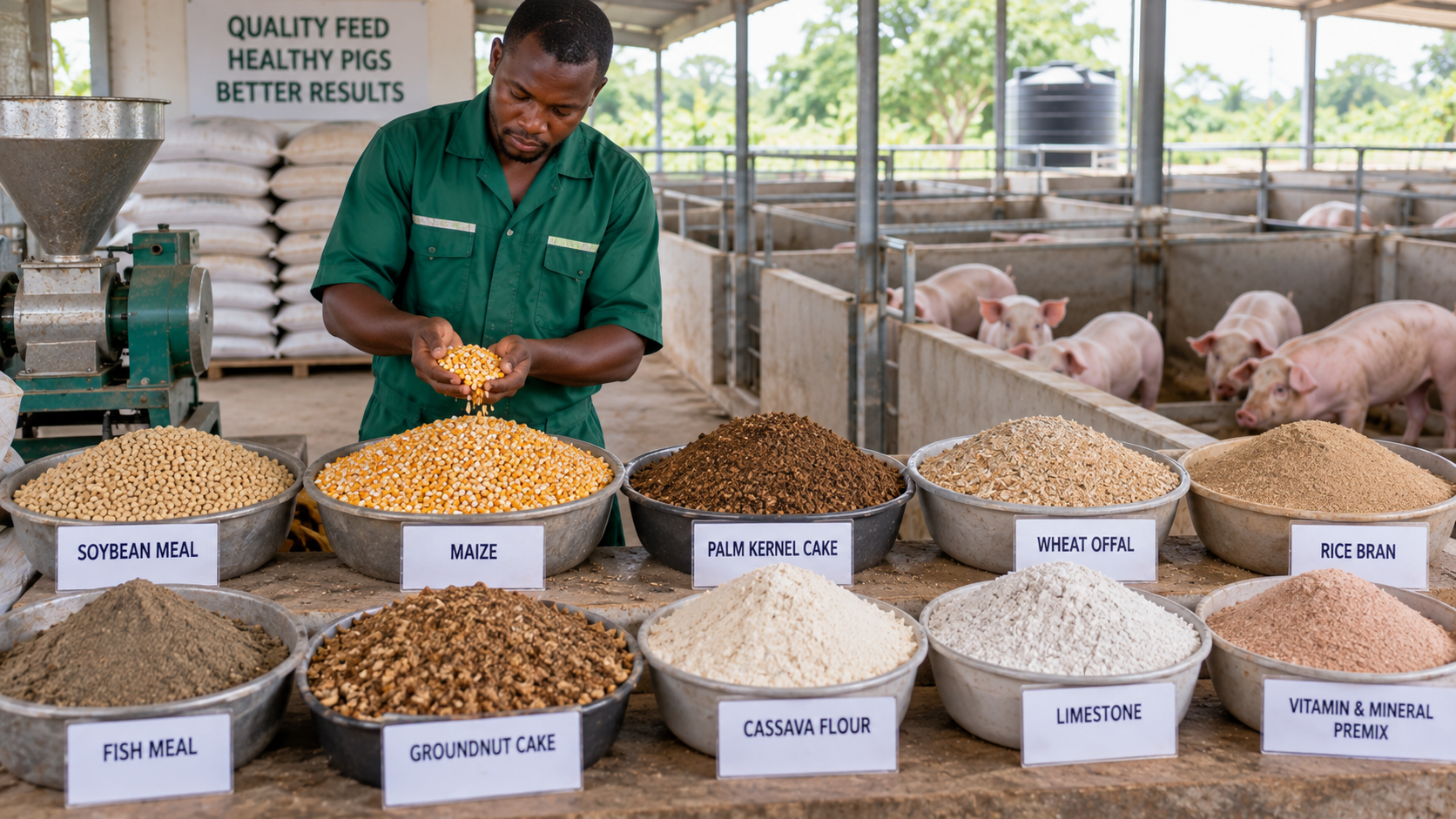
Pig Feed Ingredients and Their Functions: Complete Guide
Understanding the role of maize, soybean meal, PKC, wheat offal, amino acids, minerals and other ingredients in balanced pig feed formulation for healthy growth and efficient production.
 Livestock Nutrition
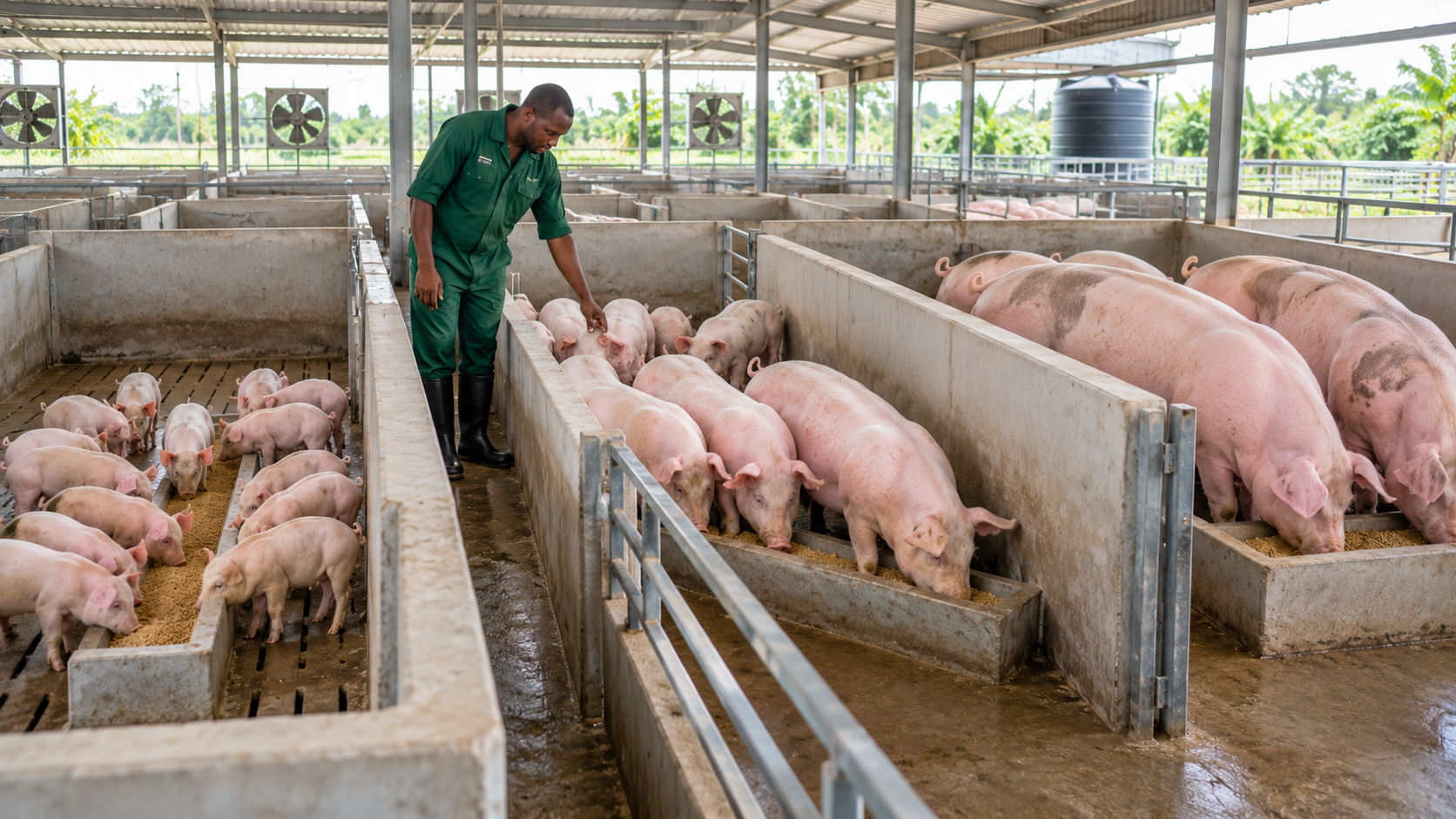
RTG SWINE CONCENTRATE IN NIGERIA: A PRACTICAL GUIDE FOR PIG FARMERS
A practical guide to choosing and using pig feed concentrate in Nigeria, understanding feeding stages and making better decisions about swine nutrition and feed efficiency.
 Livestock Nutrition
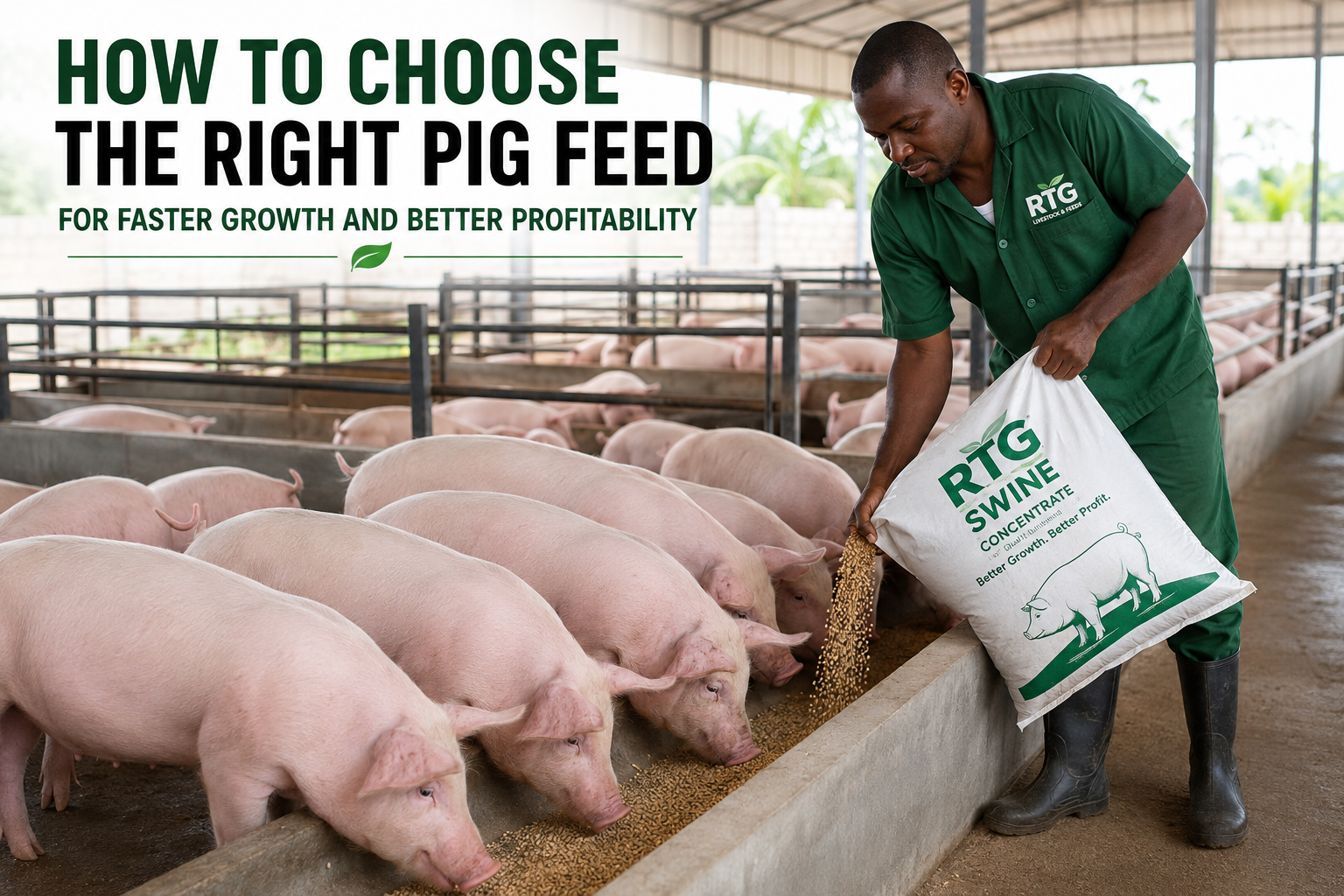
HOW TO CHOOSE THE RIGHT PIG FEED FOR FASTER GROWTH AND BETTER PROFITABILITY
Pig feed is one of the most important factors determining the success or failure of a pig farming business. A farmer may have good housing, healthy pigs and adequate management, but poor nutrition can still lead to slow growth, unnecessary feed wastage and reduced profitability. Choosing the right pig feed is therefore not simply about finding the cheapest feed available. It is about selecting a nutritionally suitable feed that matches the age, weight and production stage of the pig.